
Board Certified Doctor of Holistic Health, Naturopath and Homeopath. Virtual practice serving Ohio and California.
Published April 4, 2026 · Updated October 4, 2026
Quick answer: Microplastics have been found in human blood, placentas, breast milk, arterial plaque, the brain and ovarian follicular fluid, where they correlated with higher FSH, a marker of ovarian stress. They enter through bottled water, heated food packaging, synthetic fabrics, indoor dust and seafood, and carry BPA, phthalates and heavy metals with them. You cannot avoid them entirely; you can cut the biggest sources and support how your body clears what it takes in.
Microplastics have been detected in human ovarian follicular fluid – the fluid where eggs develop.
Researchers tested 18 women undergoing fertility treatment and found microplastics in 14 of them, with an average of 2,191 plastic particles per milliliter. These particles correlated with elevated FSH levels, a marker of ovarian stress.
The same study that found microplastics in 60% of people with cardiovascular disease – where those with plastics in arterial plaque were 4.5 times more likely to have heart attacks, strokes, or die within 34 months – also detected these particles in placentas, breast milk (26 out of 34 samples), lungs, liver, kidneys, and blood.
Microplastics have been linked to endometriosis, uterine fibroids, disrupted hormone levels, and pregnancy complications.
This isn’t a theoretical future risk. These particles are in your body right now, potentially affecting systems you might not connect to environmental exposure.
The Netflix documentary The Plastic Detox premiered in March 2026, bringing mainstream attention to this crisis. But the question isn’t whether you have microplastics. You do. The question is: what’s happening because of it?
How do microplastics get into your body?
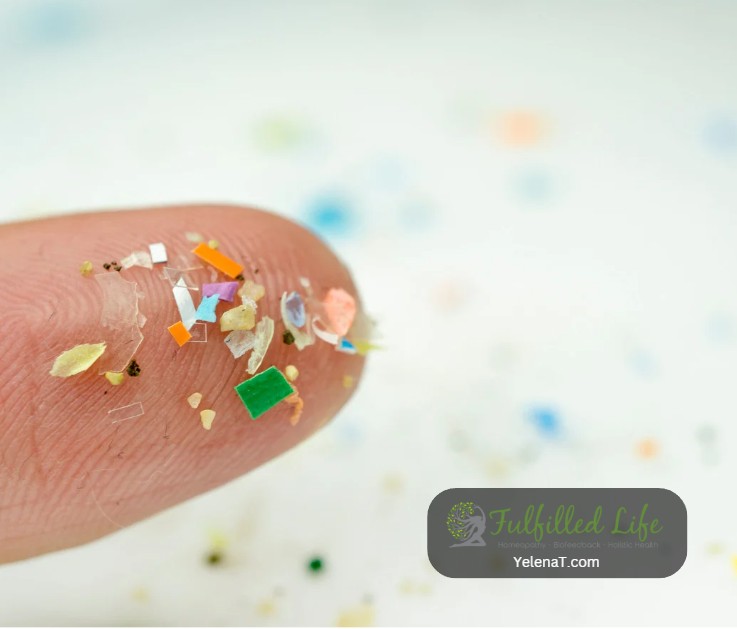
Microplastics are fragments smaller than 5 millimeters – about the size of a sesame seed or smaller. Nanoplastics are tinier still, small enough to cross into cells.
You’re exposed constantly through:
- Bottled water that releases thousands of microplastic particles per liter
- Food packaging that leaches into meals when heated
- Synthetic clothing fibers released during washing
- Personal care products containing microbeads
- Indoor air from synthetic carpets, furniture, and dust
- Seafood that has consumed plastic particles
You ingest them, inhale them, and potentially absorb them through skin. The smallest particles cross your intestinal lining, blood-brain barrier, and placental barrier.
Researchers detected microplastics in 26 out of 34 breast milk samples tested. Babies are exposed before birth through the placenta and after birth through nursing. Studies found 16 different types of microplastics in placentas, meconium, and infant feces from the same mother-infant pairs.
Why do microplastics matter for your health?
Microplastics themselves are concerning, but they also act as sponges, absorbing and carrying other toxins:
- Bisphenol A (BPA) and phthalates: Chemicals that interfere with hormone signaling
- Heavy metals: Accumulated on plastic surfaces
- Persistent organic pollutants: Compounds that do not break down easily
These compounds affect hormone balance, fertility, immune function, and trigger chronic inflammation throughout your body.
The Italian cardiovascular study is particularly alarming: people with microplastics in their arterial plaque had a 4.5-fold increased risk of heart attack, stroke, or death compared to those without detectable plastics. This suggests microplastics contribute to cardiovascular disease through inflammatory mechanisms we’re only beginning to understand.
But cardiovascular disease isn’t where this starts.
This research might explain patterns emerging in women’s health – more women in their 30s and 40s diagnosed with endometriosis, fertility struggles that don’t fit any diagnosis, and hormonal issues that started seemingly out of nowhere. The environmental factor that wasn’t on anyone’s radar.
Your immune system’s macrophages – cleanup cells designed to remove cellular debris – try to ingest these plastic particles. But plastic doesn’t break down biologically. Instead of eliminating it, macrophages transport microplastics throughout your body, depositing them in various tissues while maintaining a state of chronic immune activation.
This constant low-grade inflammation doesn’t always show up as obvious symptoms. It can manifest as fatigue, brain fog, hormonal imbalances, and metabolic dysfunction that gets dismissed as stress or aging.
Sound like you? Yelena reads your last two years of labs before the call. Book a free 15-minute consultation and bring your questions.
Book my free callWhat can your body do with microplastics, and what can’t it do?
Your liver and kidneys are your primary detoxification organs, constantly filtering blood and processing waste. They’re remarkably efficient at handling compounds your body recognizes and has evolved to process.
But plastic is different.
Some ingested microplastics pass through your digestive system and exit in stool – particularly larger particles. However, nanoplastics under 0.1 micrometers can be absorbed through your intestinal lining into your bloodstream.
Once in circulation, your liver attempts to process them through normal detoxification pathways. But plastic particles don’t break down through enzymatic metabolism the way other toxins do. Research shows microplastics can accumulate in liver and kidney tissue, potentially impairing these organs’ detoxification capacity over time.
Your lymphatic system also plays a role, moving cellular waste toward elimination. But when lymph becomes stagnant from chronic stress, dehydration, or lack of movement, this clearance slows significantly.
To put this in perspective: your ovaries could contain more plastic particles per milliliter than a plastic water bottle releases in a week of daily use. The burden isn’t just external – it’s internal and accumulating.
Which microplastic detox claims are actually helpful?
Predictably, “microplastic detox” products have flooded the market. Supplements claiming to bind plastics. Sauna protocols. Expensive testing for “plastic burden.”
Here’s what you need to understand: while research is emerging on potential approaches, we’re still in the early stages of understanding what actually supports your body’s ability to process and eliminate these particles. Some interventions being explored show promise in animal studies – certain fibers, specific probiotics, and support for phase 2 liver detoxification – but translating that to human protocols requires careful consideration.
This doesn’t mean your body is helpless. It means we focus on what we know works: supporting the elimination systems you already have and reducing ongoing exposure rather than making dramatic claims about “removing all plastics” from tissues.
This isn’t fear-mongering. This is peer-reviewed research published in 2024 and 2025 from universities worldwide.
What actually supports your body against microplastics?
Reduce Ongoing Exposure
- Replace plastic water bottles with glass or stainless steel
- Store and heat food only in glass containers, never plastic
- Choose fresh, unpackaged foods whenever possible
- Switch to natural fiber clothing and bedding when feasible
- Install HEPA air filters to capture airborne microplastics from synthetic materials
- Choose personal care products without microbeads or plastic packaging when possible
Support Your Natural Detoxification Systems
Your liver processes toxins in two phases. Phase 1 makes them water-soluble. Phase 2 packages them for elimination. Both phases require specific nutrients to function optimally.
- Adequate hydration: Drink filtered water in glass containers, aiming for about half your body weight in ounces daily
- Cruciferous vegetables: Broccoli, cauliflower, Brussels sprouts, and kale provide compounds that support phase 2 liver detoxification
- Fiber-rich vegetables: Help create bulk in stool that physically moves waste through your digestive tract
- Regular movement: Stimulates lymphatic circulation since your lymph system has no pump and relies on muscle contraction
- Quality sleep: Supports cellular repair and detoxification processes
Support Gut Barrier Integrity
Your intestinal lining determines what gets absorbed into your bloodstream. When gut integrity is compromised – from inflammation, bacterial imbalance, or chronic stress – more particles, including microplastics, can cross into circulation.
- Address gut inflammation or increased permeability
- Support stomach acid production for proper protein digestion
- Maintain healthy bacterial balance that helps protect the gut lining
Emerging research suggests certain probiotics may help process some plastic-associated compounds, and specific fibers might bind toxins in the digestive tract. But this is about supporting your body’s natural functions, not “extracting” plastics that have already embedded in tissues.
What is actually happening when microplastics accumulate?
If you’re dealing with fertility struggles, endometriosis, fibroids, or hormonal issues that don’t have clear explanations, this research identifies an environmental factor that’s been missing from the conversation.
Comprehensive functional testing can reveal how your body is handling environmental load:
- Liver function panels: Show detoxification capacity
- Inflammatory markers: Such as hs-CRP and IL-6, which can indicate chronic immune activation
- Comprehensive stool analysis: Reveals digestive efficiency and elimination patterns
- Gut permeability testing: Shows intestinal barrier integrity
- Hormone panels with metabolites: Show how your body is processing and clearing hormones
This isn’t about confirming whether microplastics are present. They are. This is about understanding whether your elimination pathways are functioning efficiently under the load they’re managing, or whether specific bottlenecks need targeted support.
How worried should you be about microplastics?
You can’t eliminate microplastic exposure entirely. They’re in air, water, food, and indoor environments.
What you can control is reducing daily intake where realistic and supporting your body’s natural processing capacity so it isn’t constantly overwhelmed.
If you’re dealing with unexplained symptoms and suspect environmental exposure might be part of the picture, understanding where your body’s elimination pathways need support could provide answers you haven’t found elsewhere. Sometimes it’s not about adding more supplements or expensive protocols. It’s about identifying where the actual bottlenecks are and addressing those specifically.
Curious about your body’s toxic burden and how efficiently your elimination pathways are functioning? Schedule a free consultation to discuss functional testing options that reveal what’s actually happening in your body.
Frequently Asked Questions
Where have microplastics been found in the human body?
In blood, lungs, liver, kidneys, placentas, breast milk (26 of 34 samples in one study), arterial plaque, the brain and ovarian follicular fluid, where 14 of 18 women tested had them at an average of 2,191 particles per milliliter.
Can microplastics affect hormones and fertility?
Research links them to endometriosis, uterine fibroids, disrupted hormone levels and pregnancy complications. In follicular fluid they correlated with elevated FSH. They also carry BPA and phthalates, chemicals that interfere with hormone signaling.
Your water bottle is part of the same load; see contaminants in tap water and why testing matters.
How do you reduce microplastic exposure?
Filter tap water instead of drinking bottled, never heat food in plastic, store food in glass or steel, choose natural-fiber clothing and bedding, vacuum and dust with a HEPA filter, and reduce ultra-processed and heavily packaged food. The biggest sources are the easiest to cut.
Some of these chemicals act as obesogens; see how obesogens in your environment influence weight gain.
Can the body remove microplastics?
Partly. Larger particles pass through the gut; the smallest cross into tissue and are harder to clear. Regular bowel movements, fiber, sweating and healthy liver and lymph function support elimination of the chemicals they carry. This is educational; Yelena is not a medical doctor.
Questions? Call or text (216) 282-4520 or book a free 15-minute consultation.
This article is educational and is not medical advice. It is not intended to diagnose, treat, cure or prevent any disease. Talk to your licensed provider before changing supplements or medications.

